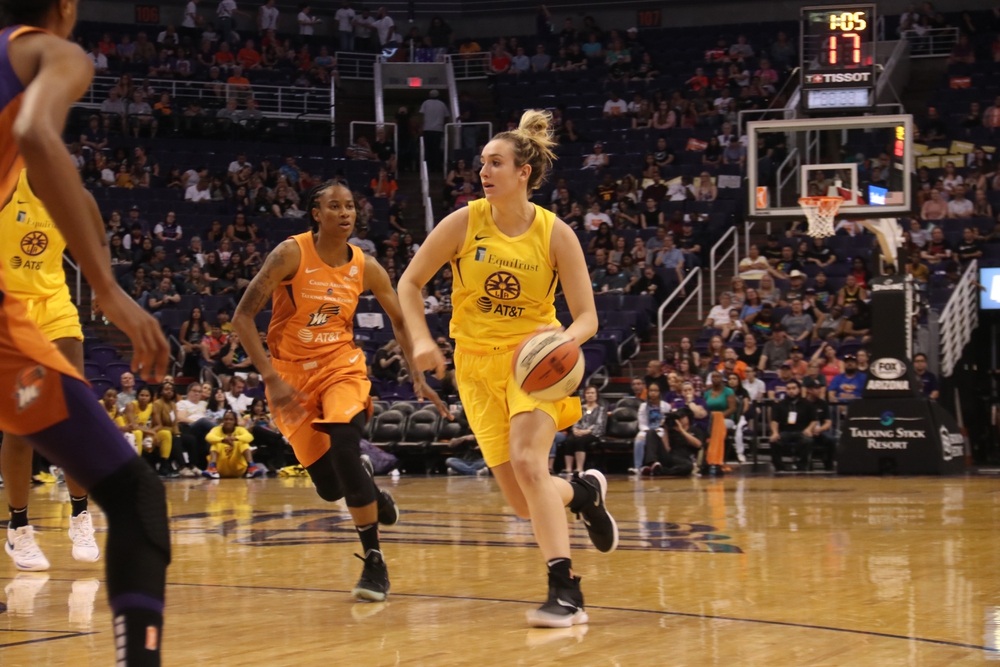
Caitlin Clark, the Indiana Fever’s star guard and a transformative figure in the WNBA, has undeniably reshaped the landscape of women’s professional basketball. As the NCAA’s all-time leading scorer and a cultural phenomenon, Clark has drawn unprecedented attention to the league, boosting viewership and ticket sales. However, her meteoric rise has been accompanied by a narrative of physical play and perceived targeting by opposing players, sparking debates about whether this treatment is cause for concern. This essay examines the evidence surrounding claims of WNBA players “attacking” Clark, considers the context of competitive sports, and evaluates whether these incidents warrant broader concern for her safety, the league’s integrity, and its future.
The Context of Physical Play in the WNBA
Physicality is an inherent part of basketball, and the WNBA is no exception. The league has long prided itself on its competitive intensity, where players employ aggressive defense, physical screens, and hard fouls to gain an edge. For rookies, particularly high-profile ones like Clark, this physicality can feel amplified as veterans test their resilience. Since entering the league in 2024, Clark has faced notable physical challenges, including a ruptured eardrum, an eye-poke incident, and a scuffle with Connecticut Sun players during her rookie season. In 2025, she has been limited to 12 games due to groin and quad injuries, some of which fans and commentators attribute to aggressive play by opponents.
Social media posts on X have amplified these concerns, with some fans claiming that Clark is being unfairly targeted, even to the point of assault. For instance, one user described incidents of Clark being “punched, had her hair pulled, poked in the face, and blindsided bounced to the ground,” suggesting a pattern of deliberate aggression. Others argue that this treatment jeopardizes Clark and could jeopardize her career and the league’s financial prospects, given her role as a key driver of revenue. However, these claims must be scrutinized carefully, as social media can exaggerate narratives without providing full context.
Examining the Evidence: Targeted Aggression or Competitive Norm?
While incidents of physical play against Clark are documented, the question remains whether they constitute targeted “attacks” or are simply part of the WNBA’s competitive nature. Several high-profile moments fuel the debate. In a July 15, 2025, game against the Connecticut Sun, Clark was involved in a heated exchange with referee Mike Price, appearing to react to uncalled fouls, and later limped off the court with a possible groin injury. Her brother, Colin, briefly posted on X, blaming the officiating for her injury, though he deleted the post shortly after. Similarly, WNBA legend Rebecca Lobo called out referees for failing to address clear fouls against Clark during a game against the Dallas Wings, suggesting inconsistent officiating may exacerbate physical play.
On the other hand, physicality is not unique to Clark. The WNBA’s anonymous player polls reveal that players like Alyssa Thomas are known for their aggressive style, with one player noting, “Everyone knows AT talks s—,” indicating that physical and verbal intensity is widespread. Clark herself is recognized as a trash-talker, though not among the league’s top, suggesting she engages in the competitive banter typical of the sport. Moreover, no suspensions or fines have been reported for deliberate attacks on Clark, and she escaped punishment for her own confrontations, such as the referee outburst. This suggests that the league views these incidents as within the bounds of competitive play, not malicious targeting.
The narrative of Clark being singled out may also be amplified by her status as the league’s most prominent figure. An anonymous WNBA player poll conducted by The Athletic in July 2025 named Clark as the future face of the league, with 53.8% of players selecting her, far ahead of peers like JuJu Watkins and A’ja Wilson. Her popularity, evidenced by 1.3 million fan votes for the All-Star Game, contrasts with her ninth-place ranking among guards in player voting, hinting at possible resentment or differing perceptions among peers. Yet, this discrepancy may reflect professional rivalry rather than personal animosity. Basketball legend Nancy Lieberman urged WNBA players to “embrace” Clark’s star power, suggesting that any perceived hostility stems from competitive dynamics rather than coordinated attacks.
Reasons for Concern
There are valid reasons to be concerned about the physicality directed at Clark. First, her injury history—missing 10 games in 2025 due to groin and quad issues—raises questions about whether aggressive play is taking a toll. If uncalled fouls contribute to these injuries, as suggested by Lobo and Clark’s brother, the league’s officiating standards may need scrutiny to ensure player safety. Second, Clark’s economic impact cannot be ignored. Her games draw record crowds, with opponents moving to larger venues to accommodate demand, and her presence has been credited with boosting the WNBA’s revenue. If physical play leads to prolonged absences, it could harm the league’s financial growth, especially as players negotiate a new Collective Bargaining Agreement (CBA).
Additionally, the perception of unfair treatment, whether accurate or not, fuels fan discontent. Posts on X describe the WNBA as a “joke” for allowing “thugs” to target Clark, reflecting a sentiment that could alienate her fanbase and damage the league’s reputation. A fan wearing Clark’s jersey was ejected from a game against the Sun after a courtside altercation, highlighting how tensions surrounding her treatment spill over into fan behavior. These incidents suggest that the league must address perceptions of bias to maintain its growing popularity.
Counterarguments: Competitive Dynamics and Clark’s Resilience
Conversely, there are reasons to view these incidents as part of the sport’s competitive fabric rather than cause for alarm. Clark’s physical treatment may reflect the WNBA’s rigorous initiation of rookies, particularly those with outsized media attention. As Candace Parker noted, Clark is an “A-level” talent but not yet among the league’s elite, indicating that she must adapt to the WNBA’s physical demands. Clark’s own competitive nature—she’s described as a “fierce competitor” who engages in trash-talking—suggests she is not a passive target but an active participant in the league’s intensity. Her ability to perform, averaging 16.9 points and 8.6 assists despite injuries, underscores her resilience.
Moreover, the WNBA has mechanisms to address excessive physicality. While fans and commentators criticize officiating, no evidence suggests a systemic failure to protect Clark. The league’s response to past incidents, such as the eye-poke controversy involving DiJonai Carrington, indicates that officials review and address questionable plays, even if not always to fans’ satisfaction. Clark’s participation in high-profile events like the All-Star three-point contest and CBA meetings further demonstrates her integration into the league, suggesting that her peers respect her contributions, even if competitive tensions persist.
Broader Implications and Recommendations
The debate over Clark’s treatment highlights broader issues in the WNBA, including officiating consistency, player safety, and the integration of high-profile stars. While the evidence does not conclusively support claims of deliberate “attacks,” the physicality directed at Clark warrants attention due to her injury history and economic importance. To address these concerns, the WNBA could enhance referee training to ensure consistent foul calls, particularly for high-contact plays. Additionally, the league should communicate transparently about disciplinary actions to counter perceptions of bias. Clark’s involvement in CBA negotiations, where she advocated for revenue sharing, suggests she is poised to influence these changes from within.
Ultimately, the physicality Clark faces is likely a mix of competitive testing and the spotlight effect of her fame. While concerning, it does not appear to be a coordinated effort to harm her. Instead, it reflects the WNBA’s intense environment, where stars must prove their mettle. Clark’s ability to navigate this challenge, coupled with her undeniable impact, positions her to thrive and reshape the league for the better.