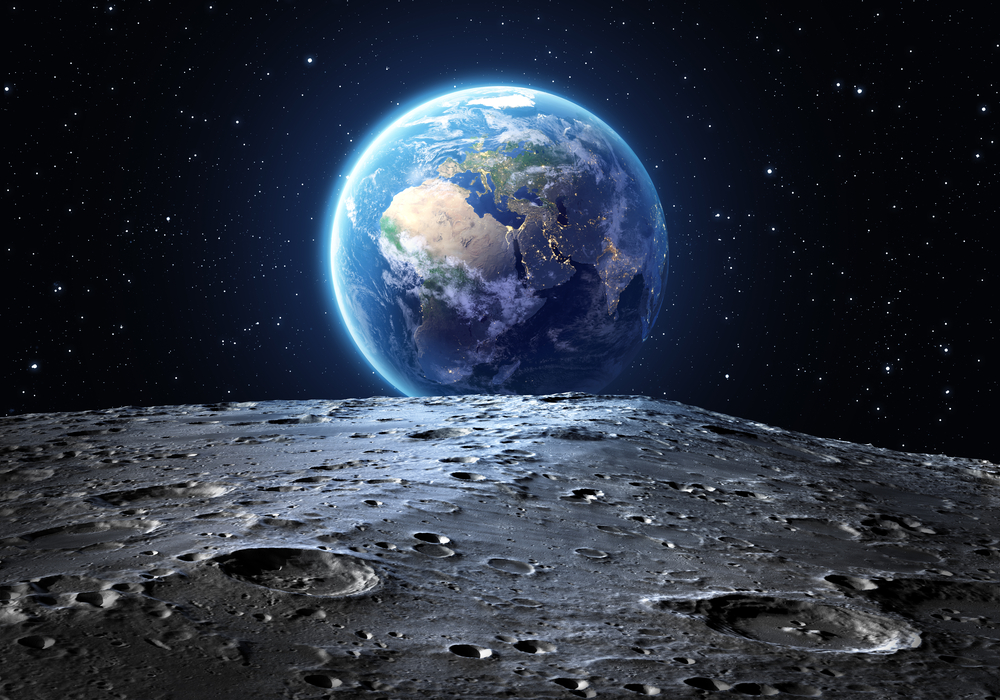
The Apollo 11 mission, which landed humans on the Moon on July 20, 1969, stands as one of humanity’s greatest achievements. Astronauts Neil Armstrong and Buzz Aldrin took those historic steps, broadcast live to millions, while Michael Collins orbited above. Yet, despite overwhelming evidence, a persistent minority promotes the idea that it was all a hoax staged by NASA to win the Cold War space race against the Soviet Union. This conspiracy theory, often called the “Moon landing hoax,” has endured for decades, fueled by online communities, documentaries, and skeptics. The question arises: should we be concerned about those who spread this narrative? In examining the origins, arguments, debunkings, and broader implications, it becomes clear that while individual beliefs may seem harmless, their promotion can erode public trust in science and institutions, warranting some level of concern.
The hoax theory originated in the mid-1970s with Bill Kaysing, a former employee at Rocketdyne, a NASA contractor. In his self-published book We Never Went to the Moon: America’s Thirty Billion Dollar Swindle (1976), Kaysing claimed insider knowledge that the landings were faked in a Hollywood studio, possibly directed by Stanley Kubrick. He pointed to alleged anomalies like the American flag appearing to “wave” in photos (despite the Moon’s lack of atmosphere), inconsistent shadows suggesting multiple light sources, the absence of stars in images, and the lethal radiation of the Van Allen belts that supposedly would have killed the astronauts. These claims gained traction through media like the 2001 Fox documentary Conspiracy Theory: Did We Land on the Moon?, which amplified doubts amid growing government distrust post-Watergate and Vietnam. Promoters today include figures like podcaster Bart Sibrel, who confronted Buzz Aldrin (leading to a famous punch), and online influencers who cite “evidence” on platforms like X (formerly Twitter).
However, these arguments have been thoroughly debunked by scientists, historians, and even amateur astronomers. The flag “waved” due to a horizontal rod and the astronauts’ handling in low gravity, not wind; it remains still in videos once released. Shadows appear inconsistent because of the Moon’s uneven terrain and wide-angle lenses, not studio lights. Stars are absent because camera exposures were set for the bright lunar surface, similar to how stars vanish in daytime photos on Earth. The Van Allen belts were traversed quickly in shielded spacecraft, posing minimal risk. Lunar rocks—842 pounds brought back—have been analyzed by global experts and match samples from unmanned probes, showing unique isotopic signatures impossible to fake on Earth. Orbital images from NASA’s Lunar Reconnaissance Orbiter, as well as Japan’s SELENE and India’s Chandrayaan missions, clearly show landing sites, footprints, and equipment. The Soviet Union, monitoring via radar, never disputed the landings—doing so would have been a propaganda coup. Faking it would have required deceiving 400,000 Apollo workers, an implausible secret in a free society.
So why be concerned? The real issue lies in the societal ripple effects. Belief in the Moon hoax correlates strongly with other conspiracies, from 9/11 “inside jobs” to flat Earth and vaccine denial. A 2022 University of New Hampshire survey found that those endorsing the hoax also doubted climate science and COVID-19 facts, highlighting a broader erosion of scientific literacy. This “conspiracist ideation” fosters distrust in expertise, as seen in links between Moon denial and climate change skepticism—U.S. Senator James Inhofe’s book The Greatest Hoax equates global warming to a Moon landing scam. Such views can harm public policy; during the pandemic, conspiracy believers resisted vaccines, contributing to excess deaths. On X, recent posts tie the hoax to anti-government sentiments, like claims it proves election fraud or elite control, amplifying division. In an era of misinformation, promoting these ideas online can radicalize vulnerable people, leading to real-world actions like harassing scientists or boycotting space programs. As one study notes, these theories persist due to cognitive biases like confirmation bias and proportionality bias, where big events demand big explanations.
On the other hand, not all promoters are malicious, and concern should be tempered. Some view it as harmless skepticism or entertainment, akin to debating Bigfoot. Free speech protects questioning authority, and dismissing all doubters as “deniers” risks alienating them further. Many believers are driven by genuine curiosity or distrust from real scandals like Tuskegee or MKUltra, not ill intent. Engaging politely, as astronomer Phil Plait suggests in Bad Astronomy, can educate rather than condemn. Polls show only 6-10% of Americans fully believe the hoax, down from peaks in the 1990s, suggesting it’s not a majority threat. On X, counterposts from users like astronomers affirm the landings with evidence, showing healthy debate.
Ultimately, yes, you should be somewhat concerned about those promoting the Moon landing hoax—not because of the theory itself, but its role in a larger pattern of antiscience sentiment. It exemplifies how misinformation spreads in echo chambers, undermining collective progress like space exploration or pandemic response. As we face challenges like climate change and AI ethics, fostering evidence-based thinking is crucial. Rather than worry excessively, respond with facts and empathy: share debunkings, encourage critical media literacy, and remember that curiosity drove us to the Moon in the first place. In a world of infinite information, concern should motivate education, not fear.